How to Split Kindling Without an Axe (Quick, Safe, and Easy)
Splitting kindling with an axe is fine — until it isn't. It's tiring, requires a reasonable level of skill, and on a cold evening when you just want the fire going, fumbling with a hatchet and a chopping block is nobody's idea of a good time.
Splitting kindling with an axe is fine — until it isn't. It's tiring, requires a reasonable level of skill, and on a cold evening when you just want the fire going, fumbling with a hatchet and a chopping block is nobody's idea of a good time.
The good news is that you don't need an axe at all. There are faster, safer, and much less effortful ways to get a full kindling basket in the time it takes to have a cup of tea.
Skadi was built specifically for this problem. But even if you're not sure a dedicated splitter is for you, this guide covers all the practical options — so you can choose what suits your setup.
Key Takeaways
→ A wall-mounted kindling splitter is the fastest and safest option for home use
→ No axe skills, no swinging, and no bending over required
→ Softwood (pine, spruce) splits easiest; hardwood needs more patience but works well too
→ A full kindling basket takes around 10–15 minutes with the right tool
→ Pallet wood is an excellent free kindling source that splits particularly easily
Why an Axe Isn't Always the Best Tool for Kindling
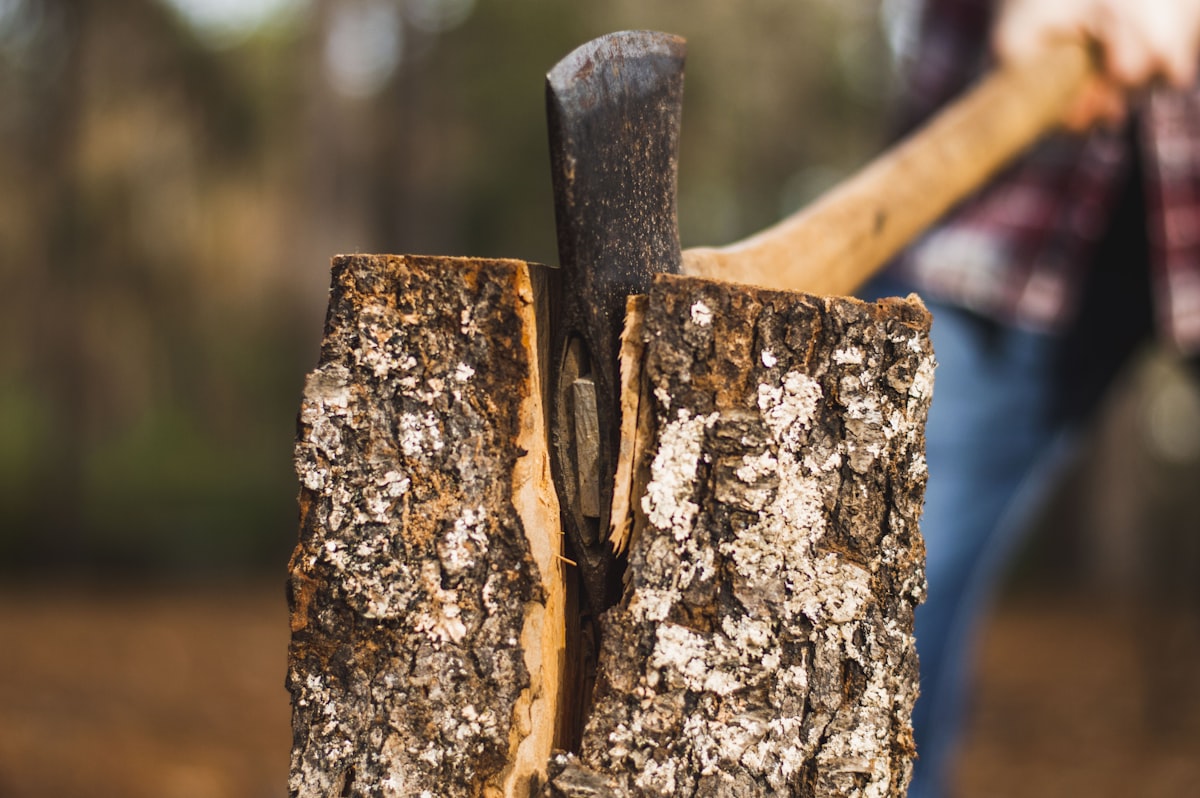
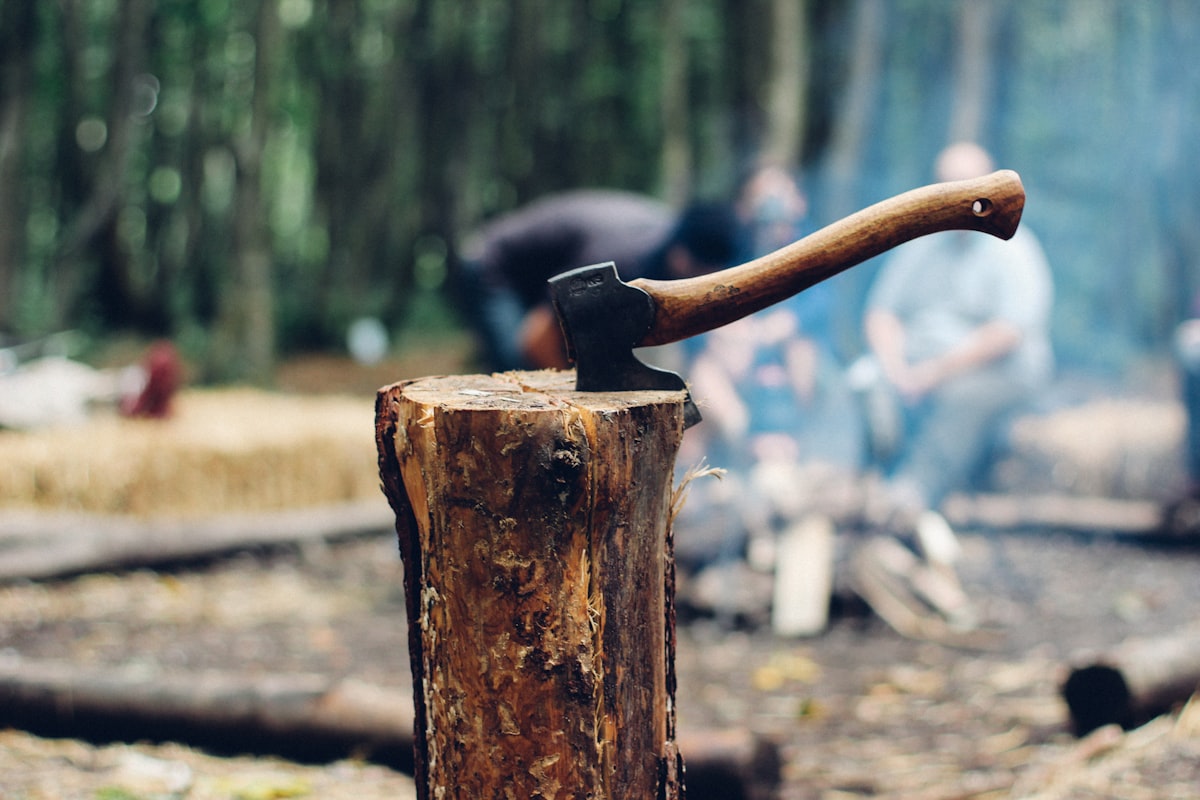
Axes are designed for splitting logs, not kindling. When you use an axe on small pieces of wood, you're using a lot of force on something that doesn't require it — which makes it unpredictable and harder to control.
Small pieces of wood can glance off, split at odd angles, or fly sideways when struck. And working over a low chopping block means you're bent over, which puts strain on your back every time. Do it for 20 minutes and you'll feel it the next day.
None of this means axes are dangerous in the right hands. But for regular household kindling, there are better options.
The Easiest Ways to Split Kindling Without an Axe
A Wall-Mounted Kindling Splitter
This is the most practical option for anyone who lights the fire regularly. A wall-mounted splitter fixes to a solid wall or post at around 1.2 metres from the ground — working height. The blade is fixed. You bring the wood to the tool, not the other way around.
Skadi works exactly like this. You place the log on one of the lower notches, press the blade into the wood from the corner or edge, and the kindling splits cleanly. No swinging, no bending, no skill required. Pallet wood and softwood splits with very little effort. Hardwood (oak, ash) takes a bit more patience, but it works.
The wall-mounted design means better leverage, a consistent working height, and fingers that stay well clear throughout. The safety pin locks the blade when it's not in use.
A Floor-Standing Blade Splitter
Floor-standing versions follow the same principle — a fixed blade, wood pressed down onto it, usually with a hammer. They work well, but you're still crouching or bending to position the wood and apply force. For people with back problems or anyone who finds low-position work tiring, the wall-mounted design is noticeably more comfortable.
A Kindling Cracker-Style Ring Splitter
Cast-iron ring splitters (the Kindling Cracker being the best-known example) use a central blade inside a safety ring. You place the log inside the ring and strike the top with a mallet or hammer. The ring keeps your hands away from the blade, which is a genuine safety benefit.
The drawbacks: you still need a hammer to hand, you're working on the floor, and they're heavy to move around. They work well for the right setup, but for daily use, the wall-mounted design is more convenient.
A Kindling Axe or Hatchet
A short-handled kindling hatchet is lighter and easier to control than a full-size axe, and experienced users can work quickly with one. If you're comfortable with hand tools and already own a good hatchet, it's a perfectly valid option.
For beginners, people who are uncomfortable around sharp tools, or anyone who wants a faster, more consistent result, a fixed-blade splitter is worth considering.
How to Use Skadi: Step by Step
Once you've mounted Skadi on your wall at roughly 1.2 metres from the ground, the process is straightforward:
Remove the safety pin and keep it nearby
Put on heavy-duty gloves
Place the log on one of the lower notches, making sure it's stable
Press the blade into the wood from a corner or edge, not the centre of a large piece
As the split opens, move the wood up to a higher notch to maintain leverage
Work through the log until you have the kindling sizes you need
Replace the safety pin when you're done
The key thing is to start from the outside edges and corners rather than pressing straight into the middle of a large piece. Softwoods like pine and spruce almost fall apart. Hardwoods need a bit more work, but the approach is the same.
Tips for Better Kindling Every Time
Use dry wood. Damp or unseasoned wood is much harder to split and doesn't light well. If you're using bought firewood, it should already be kiln-dried. For collected wood or pallet wood, give it time to dry in a ventilated space first.
Start with softwood. Pine, spruce, and larch are ideal for kindling — they split easily and ignite quickly. Once your fire is established, you can switch to hardwood for the main fuel.
Split thinner than you think. Kindling works best when it's finger-width or slightly thicker. Pieces that are too chunky take longer to catch and can slow down the fire-lighting process.
Process a batch at a time. Rather than splitting kindling fresh every time you want to light the fire, spend 15 minutes processing a batch and store it somewhere dry. A full basket lasts most people a week or two.
Pallet wood is worth trying. If you have a local source of pallets (supermarkets, builders merchants, garden centres), heat-treated (HT-stamped) pallet wood makes excellent kindling — it's usually softwood and splits very easily. Check for the HT or KD stamp before burning.
What Wood Works Best for Kindling?
Wood type | Category | Splits easily? | Ignites quickly?
Pine | Softwood | Yes | Very fast
Spruce | Softwood | Yes | Very fast
Larch | Softwood | Yes | Fast
Birch | Hardwood | Yes | Fast
Ash | Hardwood | Moderate | Moderate
Oak | Hardwood | Takes effort | Slower
Pallet wood | Usually softwood | Very easy | Very fast
Softwood is the ideal starting point for anyone new to this. Pine and spruce split with barely any effort and catch quickly from a firelighter. Hardwoods take longer to ignite but burn hotter and longer once going — useful once the firebox is up to temperature.
Conclusion
You don't need an axe to have a full kindling basket. A wall-mounted splitter like Skadi takes the effort and the risk out of the whole process — you're standing upright, the blade is fixed, and a good batch of kindling takes about ten to fifteen minutes from start to finish.
If you're tired of wrestling with an axe every time you want to light the fire, Skadi is the answer. £99, free UK delivery, ships from our UK warehouse.
Frequently Asked Questions
Can you split kindling without any tool at all?
For small, thin pieces of softwood, you can sometimes snap wood by hand or over your knee. But for anything more than tinder-thin pieces, you'll need a tool. A wall-mounted splitter is by far the easiest option for regular use.
Is a kindling splitter safer than an axe?
Generally, yes. A fixed-blade splitter keeps the blade stationary — you press the wood onto it rather than swinging a blade toward the wood. This significantly reduces the risk of the blade glancing off or missing. Skadi's safety pin also locks the blade when not in use.
What's the easiest wood to split for kindling?
Pine and spruce are the easiest softwoods for kindling. They split cleanly with very little force and ignite quickly. Pallet wood (if heat-treated and dry) is equally easy and costs nothing.
Do I need special gloves?
Heavy-duty work gloves are strongly recommended when using any splitting tool, including Skadi. They protect against splinters and give you a better grip on the wood.