Both work. The question is which one works better for you, in your home, for your fireplace.
Both work. The question is which one works better for you, in your home, for your fireplace.
An axe is a capable tool in experienced hands. A kindling splitter is faster, safer, and requires no skill — but it's also a piece of equipment you need to mount or store. The right choice depends on how often you light the fire, who uses it, and how much effort you want to put in.
This is an honest comparison of both options.
Key Takeaways
→ A kindling splitter is safer and easier for regular home use — no swinging blade, no skill required
→ An axe is more versatile and portable, but needs technique and physical effort
→ Wall-mounted splitters are the most ergonomic option — standing height, no hammer needed
→ For weekly log burner use, a splitter typically pays for itself within a season
→ The right answer depends on your frequency of use, physical ability, and setup
How Each Tool Works
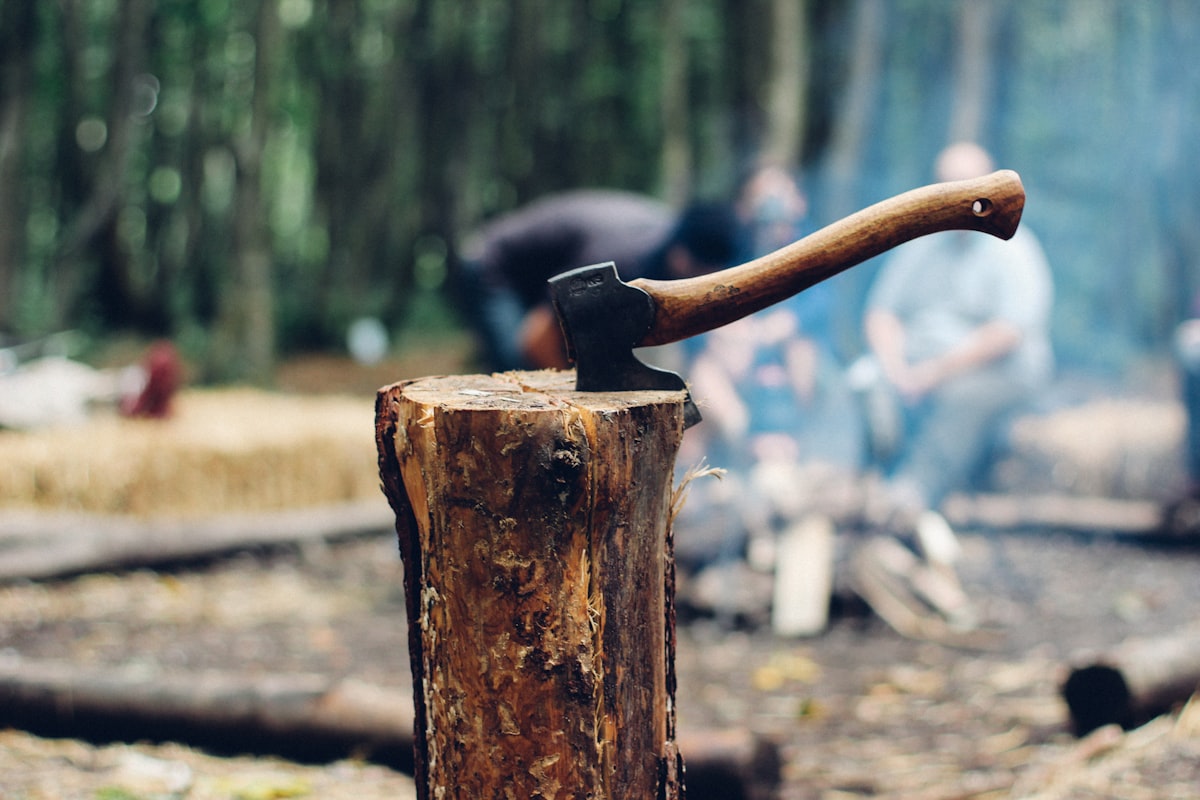
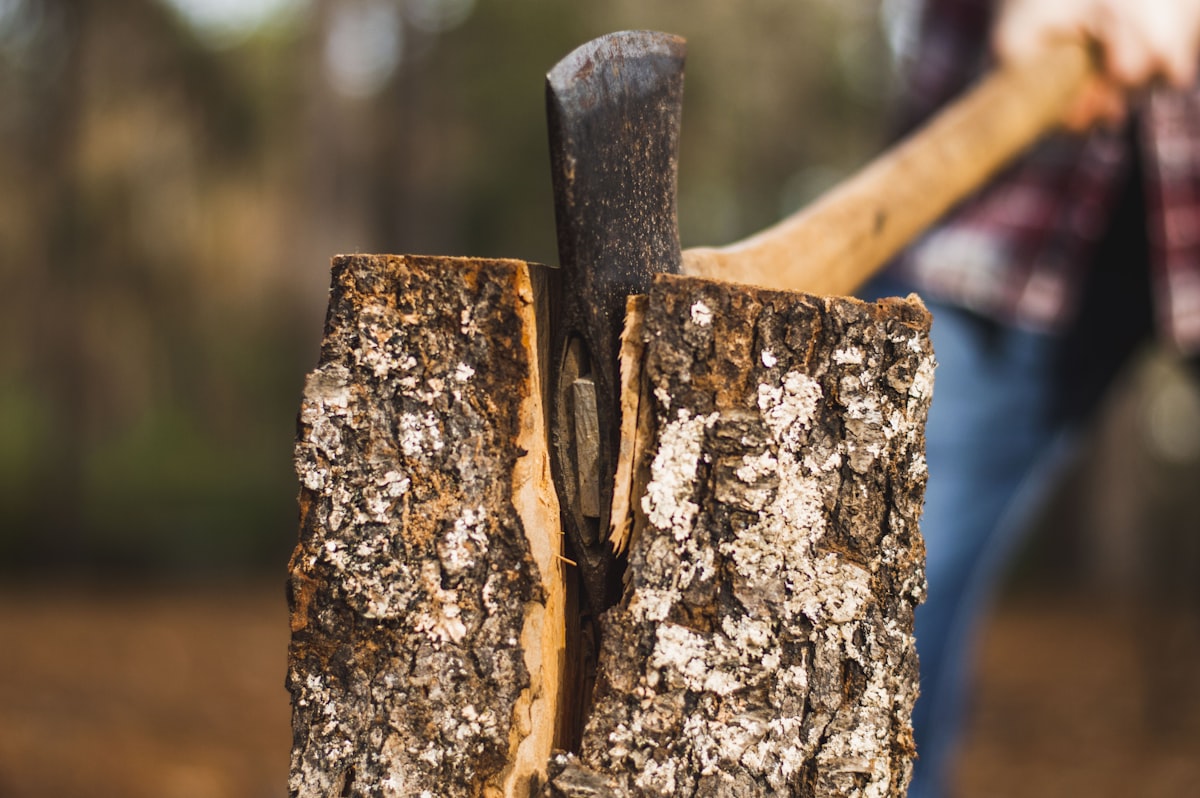
An axe or hatchet works by striking the wood with a swinging motion. The blade splits the wood by force. It requires good aim, some strength, a stable surface to work on, and a bent-over working position.
A kindling splitter uses a fixed blade. The wood comes to the blade — you press it in, rather than swinging the blade toward the wood. No striking, no momentum, no swing. A wall-mounted splitter adds ergonomics: it's at standing height, so there's no bending involved either.
The job is the same. The mechanics are very different.
Safety
This is where the gap between the two options is most clear.
An axe can glance off small, knotty, or irregular pieces of wood. Small kindling pieces are less stable on a chopping block than full logs. When you're tired, distracted, or working in poor light, the risk of a glancing blow increases.
A kindling splitter removes most of this risk. The blade doesn't move. There's no swing and no momentum to control. Skadi's safety pin locks the blade when not in use, and the multi-notch design keeps hands in a controlled position throughout. Fingers stay well away from anything sharp.
For households with children nearby, for people who are uncomfortable with axes, or for anyone who's had a near-miss with a hatchet, a fixed-blade splitter is the meaningfully safer choice.
Effort and Ease
An axe requires physical effort proportional to the wood you're splitting. Dense hardwood (oak, walnut) takes real force. Even softwood kindling takes more energy than a splitter because you're swinging rather than pressing.
With a wall-mounted splitter, body weight and arm pressure do the work. Softwood splits with minimal effort. Hardwood requires more patience but not significant force.
Over a winter season — lighting the fire three or four times a week — the difference in cumulative effort is noticeable. The axe tires you out. The splitter doesn't.
Speed
With a good technique, a practised axe user can produce kindling quickly. For beginners or infrequent users, the axe is slower because each split takes more attention and resetting.
A wall-mounted splitter is fast and consistent from the first use. You don't need to develop technique. A basket of kindling takes 10–15 minutes regardless of whether it's your first time or your hundredth.
Versatility
This is where the axe wins outright.
An axe (or hatchet) is a multi-purpose tool — you can use it for rough carpentry, camping, splitting larger pieces of firewood, clearing vegetation, and dozens of other tasks. If you spend time outdoors, a good hatchet is a genuinely versatile tool worth owning.
A kindling splitter does one job. It does it very well, but it's a dedicated tool. If you only want to own one piece of kit, an axe is more flexible.
Cost Comparison
Tool | Price range | Lifespan
Quality kindling hatchet | £20–60 | Many years with care
Floor-standing blade splitter | £30–70 | Several years
Kindling Cracker (ring splitter) | £80–130 | Very long (cast iron)
Skadi wall-mounted splitter | £99 | Very long (steel)
All of these are one-time purchases. The axe is cheaper upfront but requires more ongoing effort. The splitter has a higher upfront cost but saves time and effort across every season you use it.
If you're currently buying pre-split kindling, a splitter typically pays for itself in a single heating season.
Head-to-Head Summary
| Axe/Hatchet | Wall-Mounted Splitter (Skadi)
Safety | Moderate — requires care | High — fixed blade, safety pin
Effort | Higher | Lower
Speed (regular use) | Good with practice | Consistent from first use
Ergonomics | Bent over, low position | Standing height, no bending
Skill needed | Yes — technique matters | No — press and split
Versatility | High — multi-purpose | Low — one job
Best for | Occasional or outdoor use | Regular home use
Which Should You Choose?
Choose an axe if:
You light the fire occasionally (a few times a month or less)
You're already comfortable with a hatchet and find it quick
You want a multi-purpose tool for outdoor and camping use too
You have limited space and don't want a wall-mounted fixture
Choose a wall-mounted splitter if:
You light the fire regularly — weekly or more — through the winter
Safety is a priority (children in the house, personal preference)
Back discomfort or joint problems make low-position chopping uncomfortable
You want a tool the whole household can use without training
For most regular log burner owners in the UK, the splitter wins. The axe requires more from you every single time you use it. The splitter doesn't.
Conclusion
An axe is a perfectly good tool in the right hands. A kindling splitter is a better one for regular household use — it's safer, requires less effort, and produces consistent results without any practice.
For regular household use, yes. A kindling splitter is safer (fixed blade, no swing), easier to use (no skill or technique required), and more ergonomic (wall-mounted versions work at standing height). An axe has the advantage of versatility but requires more effort and technique for consistent results.
What is the safest way to split kindling?
A fixed-blade wall-mounted splitter is the safest option for home use. The blade stays stationary; you press the wood onto it. There's no swinging motion and no risk of a blade glancing off. Skadi also includes a safety pin that locks the blade when not in use.
Do I need a special axe for kindling?
A hatchet or kindling axe (shorter handle, lighter head) is easier to control than a full-size splitting axe for kindling work. A 14–19 inch handle and 1.5–2.5 lb head is a common recommendation. However, for regular home use, a dedicated kindling splitter is generally faster and safer.
Can I use a kindling splitter on large logs?
No — kindling splitters are designed for smaller pieces of wood, typically under 10 cm diameter. For splitting full-size logs, you need a log splitter, a maul, or a splitting axe.