Can You Use Pallet Wood for Kindling? (Yes, Here's What to Check)
Yes, you can use pallet wood for kindling, and it's one of the best free kindling sources available in the UK. The only catch: you need to check the stamp before you burn it.
Yes, you can use pallet wood for kindling, and it's one of the best free kindling sources available in the UK. The only catch: you need to check the stamp before you burn it.
There are pallets stacked behind supermarkets, builders merchants, and garden centres every week. Most people drive past without a second thought. But if you've got a log burner or fireplace and a reliable way to split them, those pallets represent months of free kindling.
One simple check is all that stands between you and a free supply of excellent softwood kindling. This guide covers what to look for on the stamp, where to find pallets near you, whether you need to dry them first, and how to split them quickly and safely.
Key Takeaways
→ Pallet wood is safe to burn as kindling only if stamped HT (heat treated) or KD (kiln dried)
→ Never burn pallets stamped MB (methyl bromide), they release toxic fumes when burned
→ Avoid unmarked pallets entirely, no stamp means no way to confirm safe treatment
→ Most pallet wood is softwood (pine or spruce), ideal for kindling, ignites quickly
→ A wall-mounted kindling splitter makes processing a full pallet fast and easy
Is Pallet Wood Safe to Burn?
The short answer: it depends on the stamp.
Pallet wood is most often softwood, pine or spruce, which is exactly what you want for kindling. It ignites quickly, splits easily, and gets a fire going without any struggle. The problem isn't the wood itself; it's what some pallets have been treated with.
Some pallets were historically fumigated with methyl bromide (MB), a pesticide that releases harmful fumes when burned. These aren't fumes you'd want anywhere near a fireplace, a log burner, or children in the room. MB treatment has been largely phased out across Europe, but older stock still circulates, which is why checking the stamp every time is non-negotiable.
The rule is simple: check the stamp, and only take pallets you can positively identify as safe.
How to Read Pallet Stamps
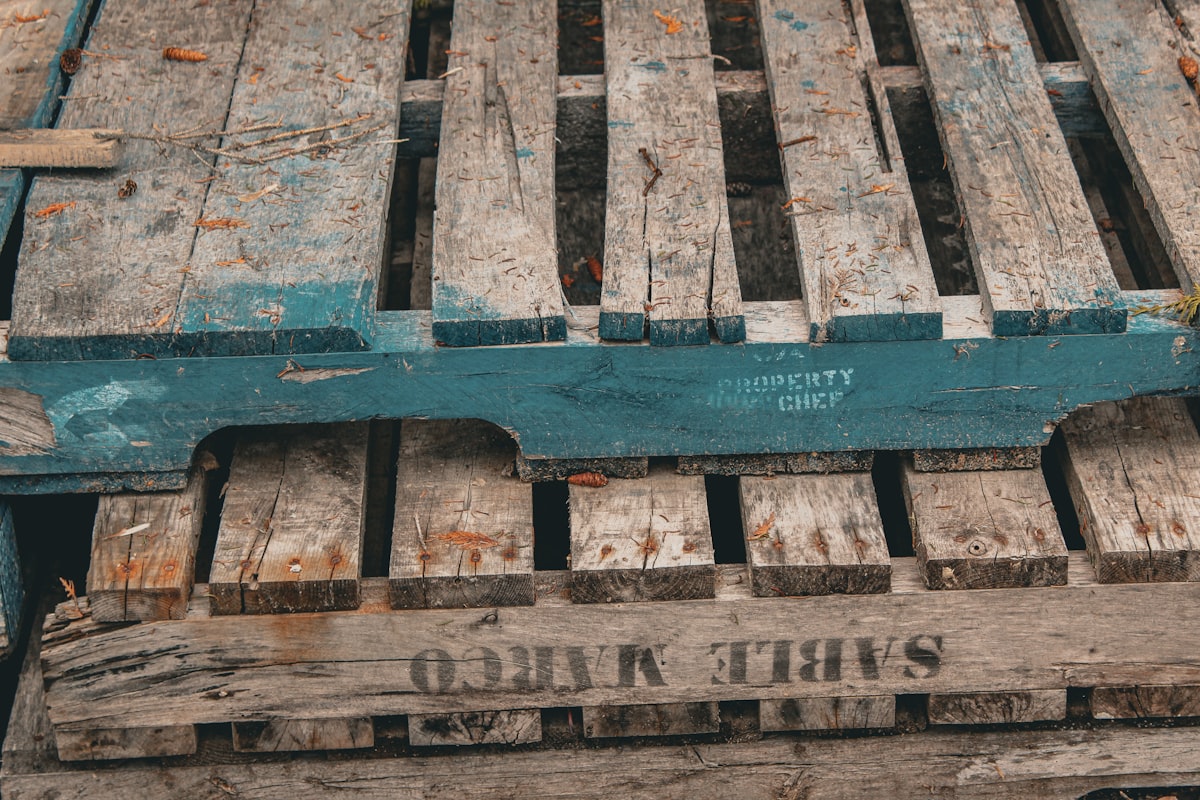
Every pallet used in international trade carries a small stamp burned or branded into the wood, usually on the side or the central stringer (the thick beam running through the middle). Here's what each marking means:
HT, Heat Treated
The wood has been heated to a core temperature of 56°C for at least 30 minutes to eliminate insects and pathogens. No chemicals are used in this process. HT pallets are safe to burn and make excellent kindling.
KD, Kiln Dried
Kiln drying uses heat rather than chemicals. Like HT, the KD process involves no pesticides. Kiln-dried pallets are safe to burn, and their low moisture content means they may be ready to use without additional drying time.
MB, Methyl Bromide
Do not burn these. MB pallets have been treated with a toxic pesticide. When burned, they release fumes that are harmful to breathe. If you see "MB" anywhere on a pallet, leave it where it is.
DB, Debarked
DB indicates the bark has been removed. It tells you nothing about chemical treatment. A pallet stamped only DB could be perfectly safe, or it could have been treated with something else. Unless there's also an HT or KD stamp alongside, treat it as an unknown and leave it.
No Stamp at All
Unstamped pallets may never have entered international trade, or may simply have had the stamp worn away. Either way, you can't verify the treatment. Leave them, it's not worth the risk.
The practical rule: only take HT or KD. Leave everything else.
Stamp | Meaning | Safe to burn?
HT | Heat treated | Yes
KD | Kiln dried | Yes
MB | Methyl bromide | No, never burn
DB | Debarked only | Unknown, avoid
No stamp | Unknown treatment | Unknown, avoid
Where to Find Free Pallets in the UK
Once you know what you're looking for, free pallets are surprisingly easy to find. Most businesses receive regular deliveries on pallets and need someone to take them away.
Good places to ask:
Supermarkets, ask at the delivery entrance; many stores have a regular surplus and will hold them for you
Garden centres, seasonal stock comes in on pallets; they're often glad to see them go
DIY and builders merchants, B&Q, Wickes, and similar stores frequently have stacks outside or round the back
Industrial estates, a polite knock at the gate of a manufacturing unit will often get you more pallets than you can carry
Facebook Marketplace, search "free pallets" and filter by location; listings appear regularly and go quickly
Freecycle and Gumtree, set a search alert and check in every few days
One practical tip: if you find a good source, tell them you'll collect regularly. Most businesses would rather have a reliable person take pallets away than deal with the build-up themselves.
Does Pallet Wood Need to Dry Before Burning?
It depends on how the pallet has been stored.
HT pallets kept undercover in a dry warehouse are often low enough in moisture to use reasonably quickly. Pallets that have been sitting outside in the rain, stacked on wet ground, or stored through a wet autumn may have absorbed significant moisture and will need time to dry out.
For kindling, you want moisture content below 20%. A basic moisture meter costs around £10 and takes two seconds to use, it's worth having if you're serious about getting good fires going reliably. Stick the probes into the wood, and the reading tells you whether it's ready.
If pallets need drying, four to eight weeks in a covered, ventilated space, a garage, shed, or open lean-to, is usually enough. Stack them off the ground, leave gaps for airflow, and they'll come down to a usable moisture level without much fuss.
How to Split Pallet Wood into Kindling
This is where the right tool makes all the difference.
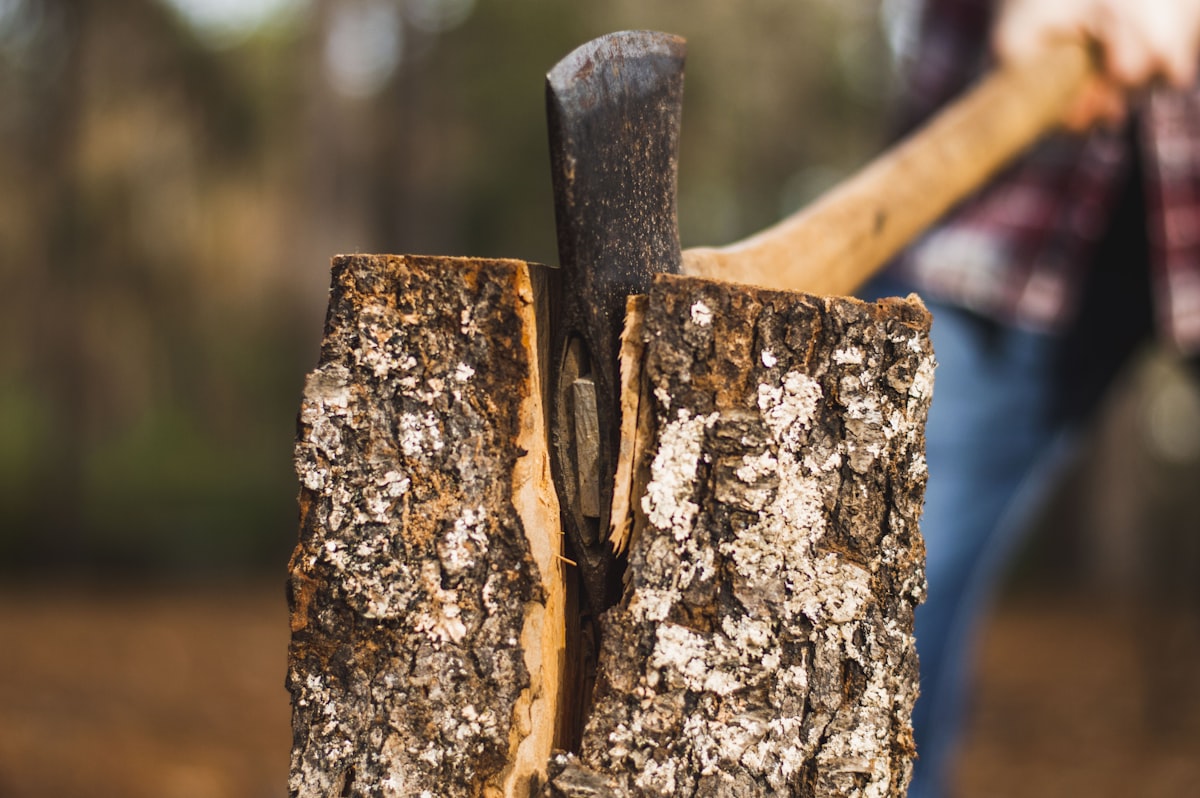
Pallet slats are typically 1–3 cm thick. Once you've broken or sawn them into manageable lengths (35–40 cm works well for most kindling baskets), they split easily into finger-width pieces. The wood is soft and straight-grained, it practically asks to be split.
A wall-mounted kindling splitter like Skadi is ideal for this job. You mount it at around 1.2 metres from the ground, which means you're working at standing height. The blade is fixed to the wall. You press the wood onto the blade, no swinging, no axe, no crouching. Pallet slats go through with very little effort, and fingers stay well clear throughout.
Here's the full process:
Remove any nails with a claw hammer or pry bar, work carefully and keep them in a tin to bin safely
Break or saw slats down to roughly 35–40 cm lengths
Mount Skadi and remove the safety pin
Press each slat onto the blade from the corner or edge, working through the piece
Split each slat into two or three pieces, pallet softwood needs very little pressure
Stack the finished kindling loosely to allow any remaining moisture to continue escaping
Replace the safety pin when you're done
A standard European pallet (1,200 x 1,000 mm, around 10–12 slats) typically yields 30–50 pieces of kindling depending on how finely you split it. That's a week or two of fire-lighting from a single pallet, at a cost of nothing but 15 minutes of your time.
A bag of kiln-dried kindling from a fuel supplier costs around £4–8. If you're lighting the fire three or four times a week through winter, that adds up to £40–80 a month, more than most people realise.
Processing a single pallet with a wall-mounted splitter takes about 15–20 minutes: a few minutes removing nails and cutting to length, and ten minutes at the splitter. For 30–50 pieces of kindling, the economics are obvious.
The equation tilts firmly in favour of pallet wood if:
You have a reliable source within a few miles
You have a good splitting tool that makes the processing fast
You light the fire regularly from October through March
Without a proper splitting setup, processing pallet slats is more effort, you're crouching over a floor-standing tool or working with a hatchet. With Skadi on the wall, it's quick, consistent work. Process one pallet on a Saturday morning and you'll have kindling for a fortnight.
A Note on Using Pallet Wood in a Log Burner
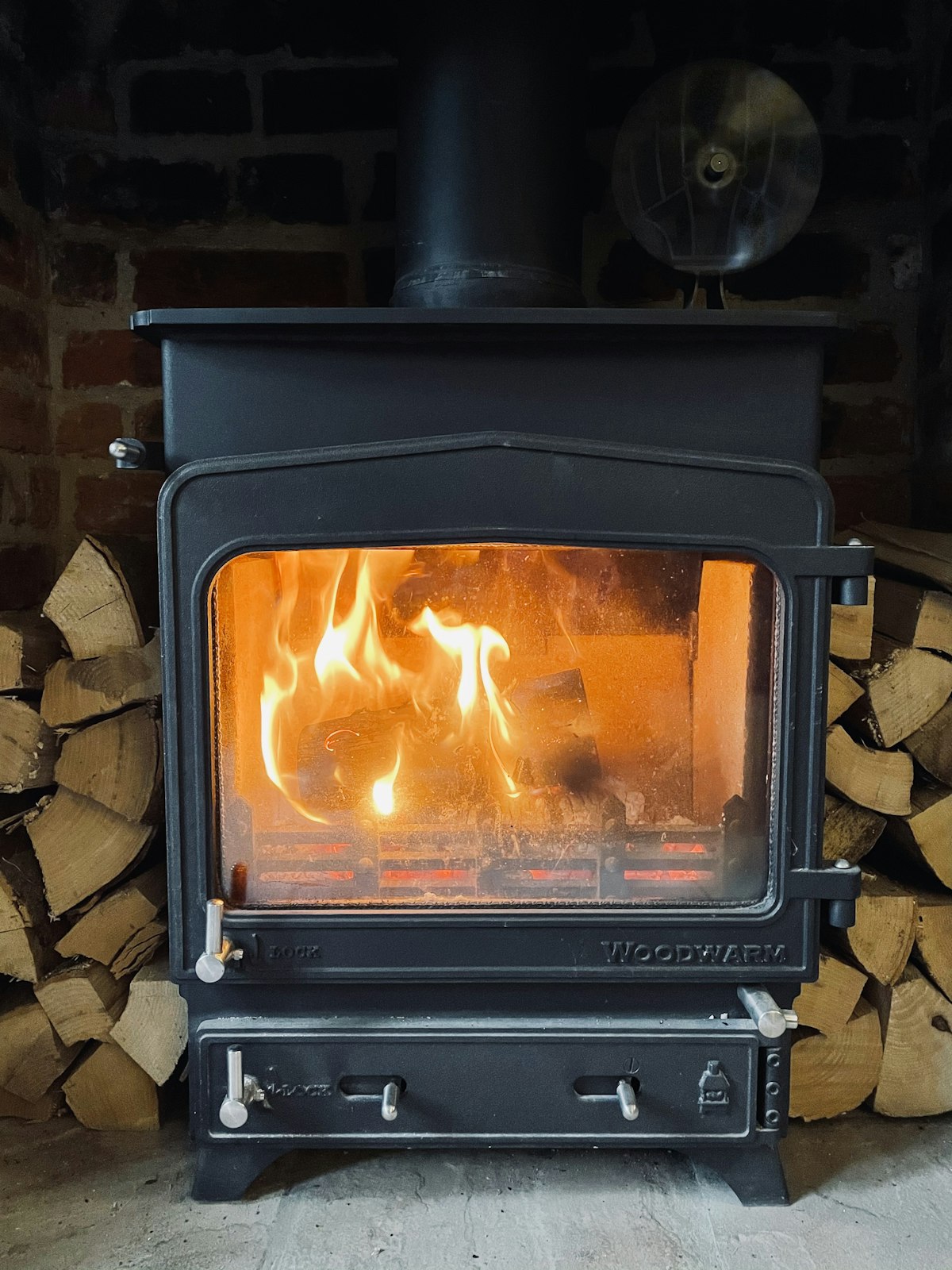
Pallet wood makes excellent kindling for a log burner, but it isn't a substitute for seasoned hardwood logs as your main fuel.
Pine and spruce ignite quickly and produce enough heat to bring the firebox up to operating temperature. That's the job of kindling. Once the fire is established, switch to your seasoned hardwood logs for a long, steady burn.
Don't be tempted to use large amounts of softwood as your primary fuel. It burns fast, produces more smoke than seasoned hardwood, and can cause faster creosote build-up in the flue over time. As kindling, though, it's the right material for the job.
Conclusion
Pallet wood is one of the most practical free kindling sources available in the UK, and it's sitting in skips and loading bays all over the country. Check the stamp, take only HT or KD-marked pallets, give them a few weeks to dry if they've been outside, and you'll have a dependable supply of softwood kindling through the colder months.
The thing that makes this practical rather than just a good idea is having the right way to split it. Skadi's wall-mounted design makes processing pallet slats quick, safe, and easy on your back, and turns a 15-minute job into a proper kindling supply.
Frequently Asked Questions
Are all wooden pallets safe to burn?
No. Only pallets stamped HT (heat treated) or KD (kiln dried) are safe to burn. Pallets stamped MB (methyl bromide) must never be burned as they release toxic fumes. Unmarked pallets should also be avoided, without a treatment stamp, there's no way to confirm what they've been treated with.
What does HT mean on a pallet?
HT stands for heat treated. The pallet has been heated to a core temperature of 56°C for at least 30 minutes to kill pests and pathogens, without the use of any chemical treatment. HT pallets are safe to burn as kindling or firewood.
Can you burn painted pallets?
No. Painted or varnished pallets should not be burned. The coatings on commercial pallets can release harmful fumes when burned. Only burn natural, unpainted wood pallets with a confirmed HT or KD stamp.
How long does pallet wood take to dry?
Pallets that have been stored outside in wet conditions may need four to eight weeks drying in a covered, ventilated space before use. Kiln-dried (KD) pallets may be ready to use sooner. A moisture meter is a cheap and useful way to confirm, aim for under 20% moisture content before burning.
Is pallet wood good for a log burner?
Pallet wood is excellent as kindling in a log burner. Most pallet wood is softwood (pine or spruce), which ignites quickly and produces enough heat to get the firebox up to temperature. It's not ideal as a primary fuel, use seasoned hardwood logs for that, but as kindling, it's one of the best options available.
How do I split pallet wood into kindling?
Once you've removed the nails and cut the slats to length, pallet wood splits easily. A wall-mounted kindling splitter is the most practical tool, you work at standing height, press the wood onto the fixed blade, and the slats split cleanly. Pallet softwood requires very little force.
SEO Checklist
Primary keyword in H1
Primary keyword in first 100 words
Primary keyword in 2+ H2 headings
Keyword density ~1.5%
2 internal links to product/buy page
External authority link opportunity (HETAS can be added)
Meta title 45 characters
Meta description 151 characters
~1,700 words
Proper H2/H3 hierarchy
Comparison table included
FAQ section for FAQPage schema
British English throughout
"Split/splitting" used (not "chop/chopping")
"Wall-mounted" hyphenated throughout
Skadi mentioned naturally mid-article and in conclusion
CTA links to buy page twice
AI Search Optimisation Checklist
Direct answer in first 1-2 sentences (featured snippet target)